New · Live Practice

Voice role-play practice, built from your own SOP

Your people talk to a character who knows only your document: a doctor who doubts the claim, a customer with questions, an auditor who asks how the job is done. Out loud, in their own language, on their phone. Then they see exactly what they got right and wrong, in their own words, and a manager can listen.

  • 4kinds of practice
  • 8characters, plus anyone you describe
  • 15languages
A real call, recorded in our demonstration workspace
How a call goes

Brief. Call. Know exactly what to fix.

Three real screens from the call in the film above. Nothing staged: the auditor’s questions and the marking are the product’s own.

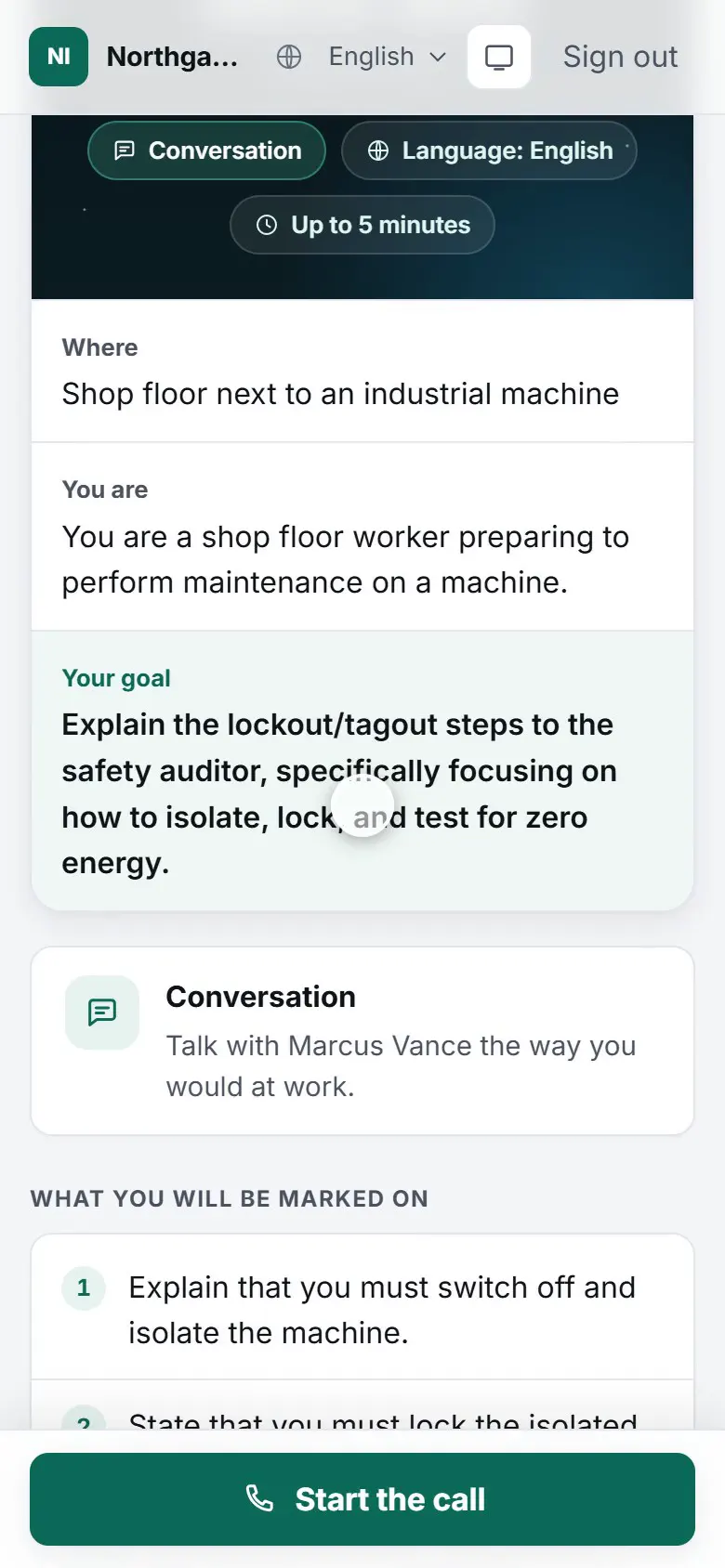
  1. The briefing screen: who they will talk to, where, their goal and what they will be marked on
    1 · The briefing

    Who, where, and what good looks like

    In their language: who they are about to talk to, the situation, their goal and the points they will be marked on. One tap starts the call.

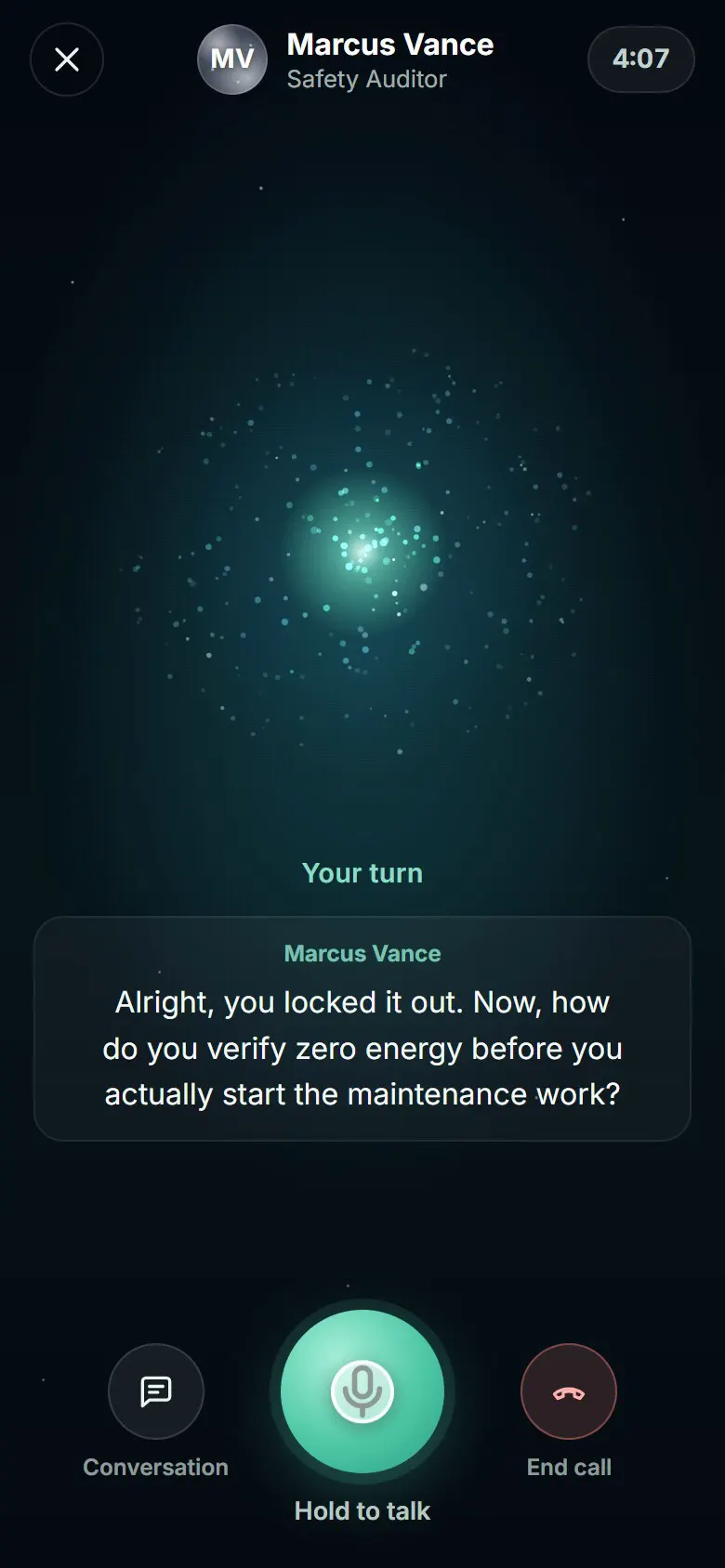
  2. The call screen: the auditor's question in captions, a hold-to-talk button and a talk-time clock
    2 · The call

    A real voice that pushes back

    Hold the button to talk, let go to hear the answer. Live captions, a transcript beside it, and a clock that counts talk time only: a pause costs nothing.

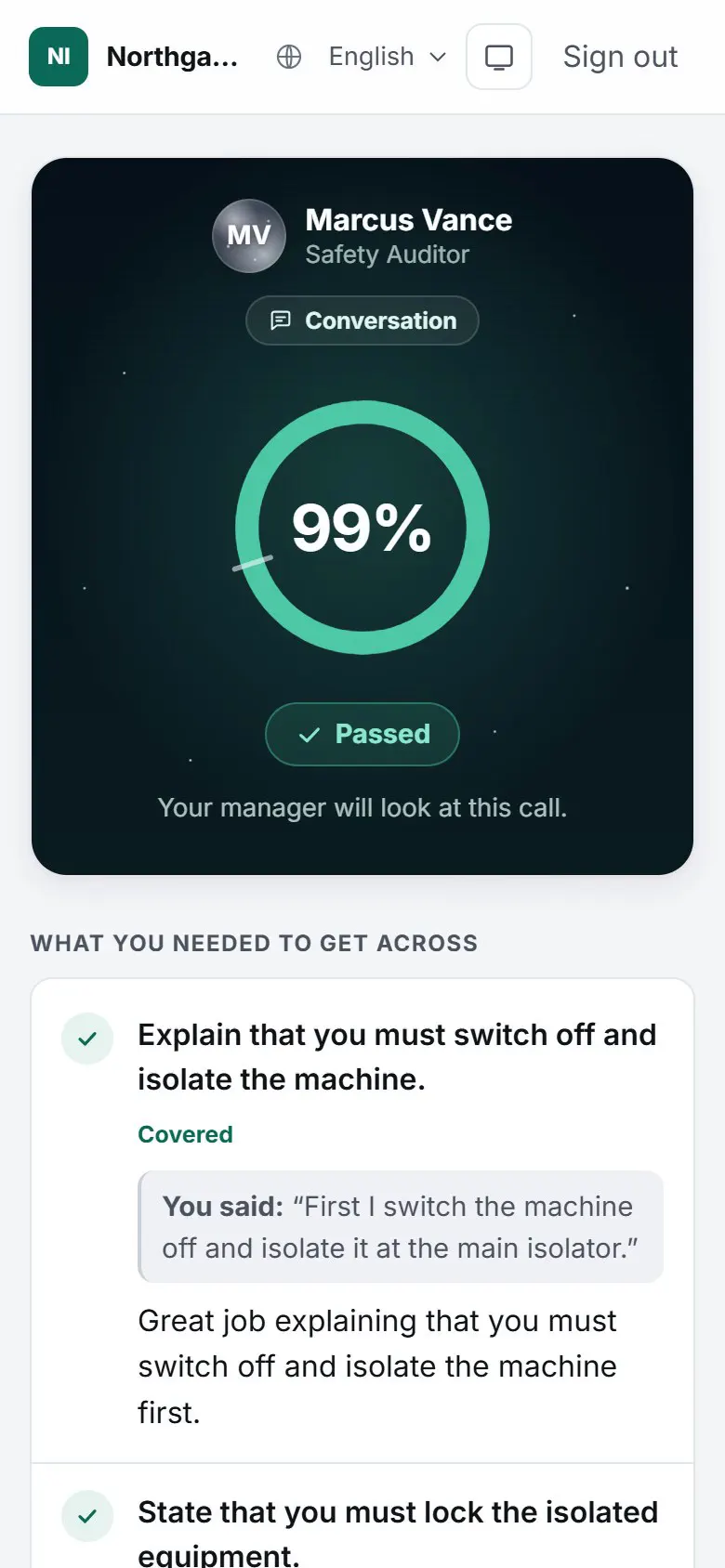
  3. The result: the mark, each point with what they actually said, and coaching
    3 · The result

    Marked against your document

    Each point, covered or not, with their own words quoted back, what to do next time and a model answer. They can dispute a mark, or try again.

Four kinds of practice

Talk it, catch it, explain it, drill it

Each one is drafted from your document in about half a minute. The screens below are real calls, three of them in Hindi.

Conversation: a real call screen in English
English

Conversation

The AI plays a person from the job. It reacts like them, doubts a claim that does not match your document (“Are you sure? I heard something different”) and never teaches the answer. Marked on the points they must get across, the lines they must never say, the moments planted in the call and four skills: listening, clarity, care and handling questions.

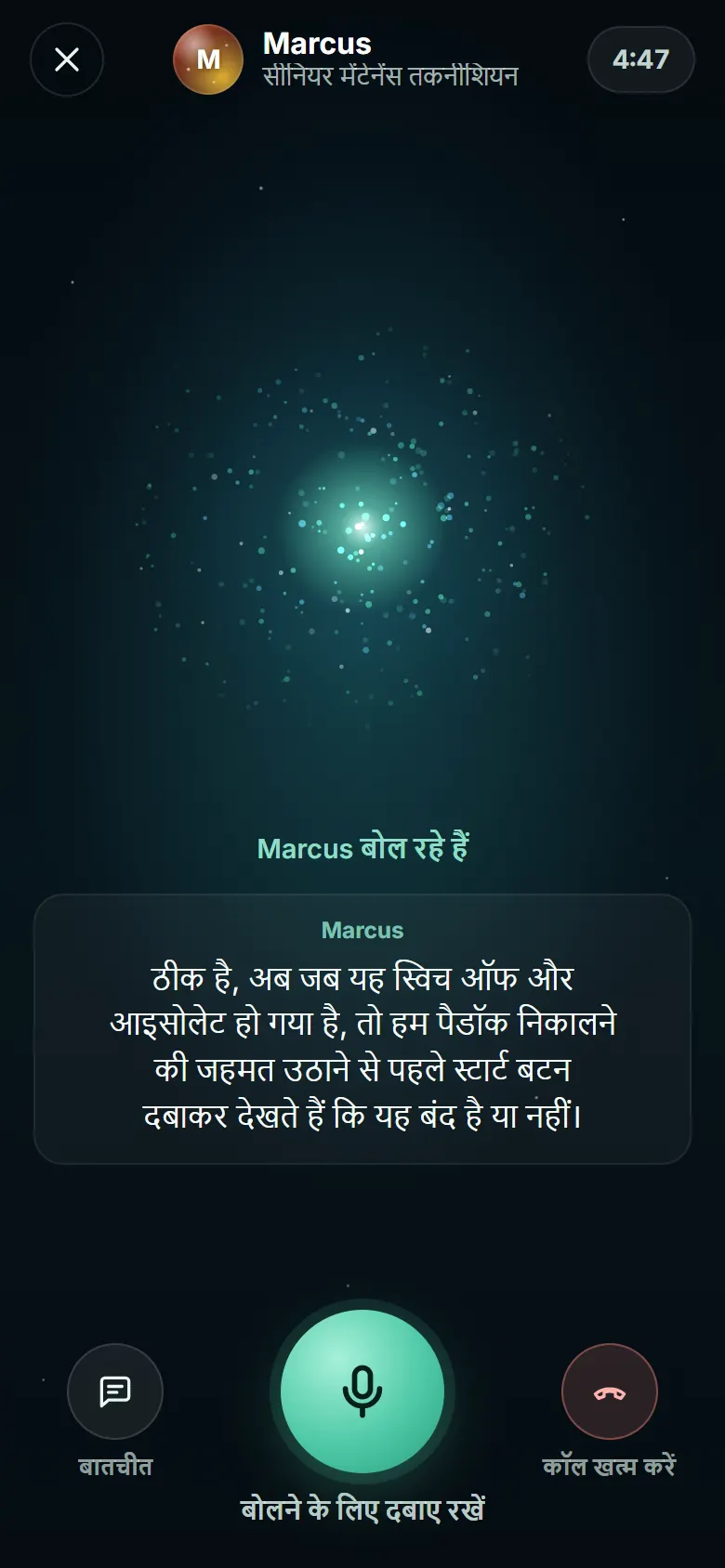
Spot the mistake: a real call screen in Hindi
Hindi

Spot the mistake

An AI colleague does a task from your document out loud, step by step, and makes several of the mistakes it warns against, one at a time. Your person has to stop them and correct each one with what the document says. Marked on every mistake.

Show and explain: a real call screen in Hindi
Hindi

Show and explain

The AI holds up the teaching pictures from your own document, never generated ones, and asks what is happening there. Your person explains it out loud. What the AI asks, and what a good answer says, are written for you from each picture.

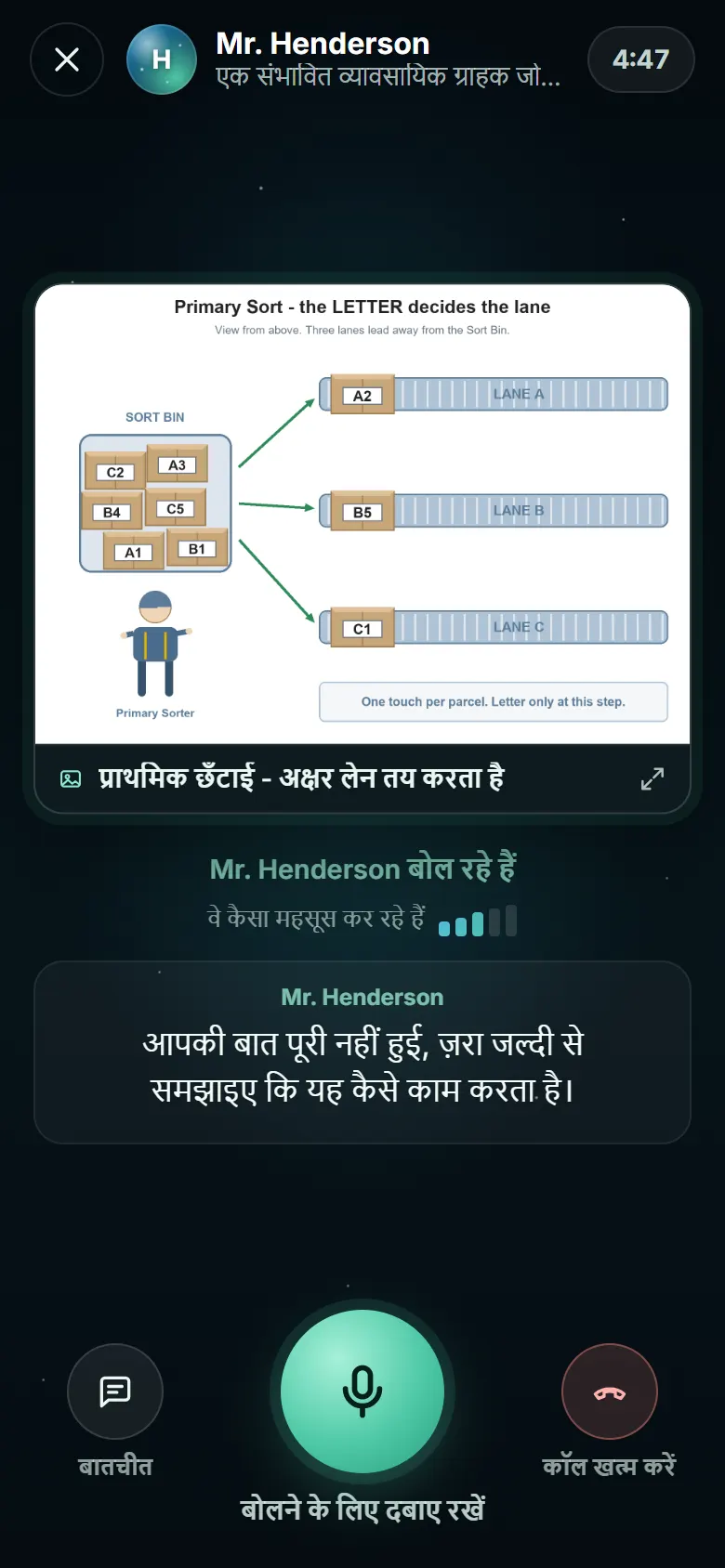
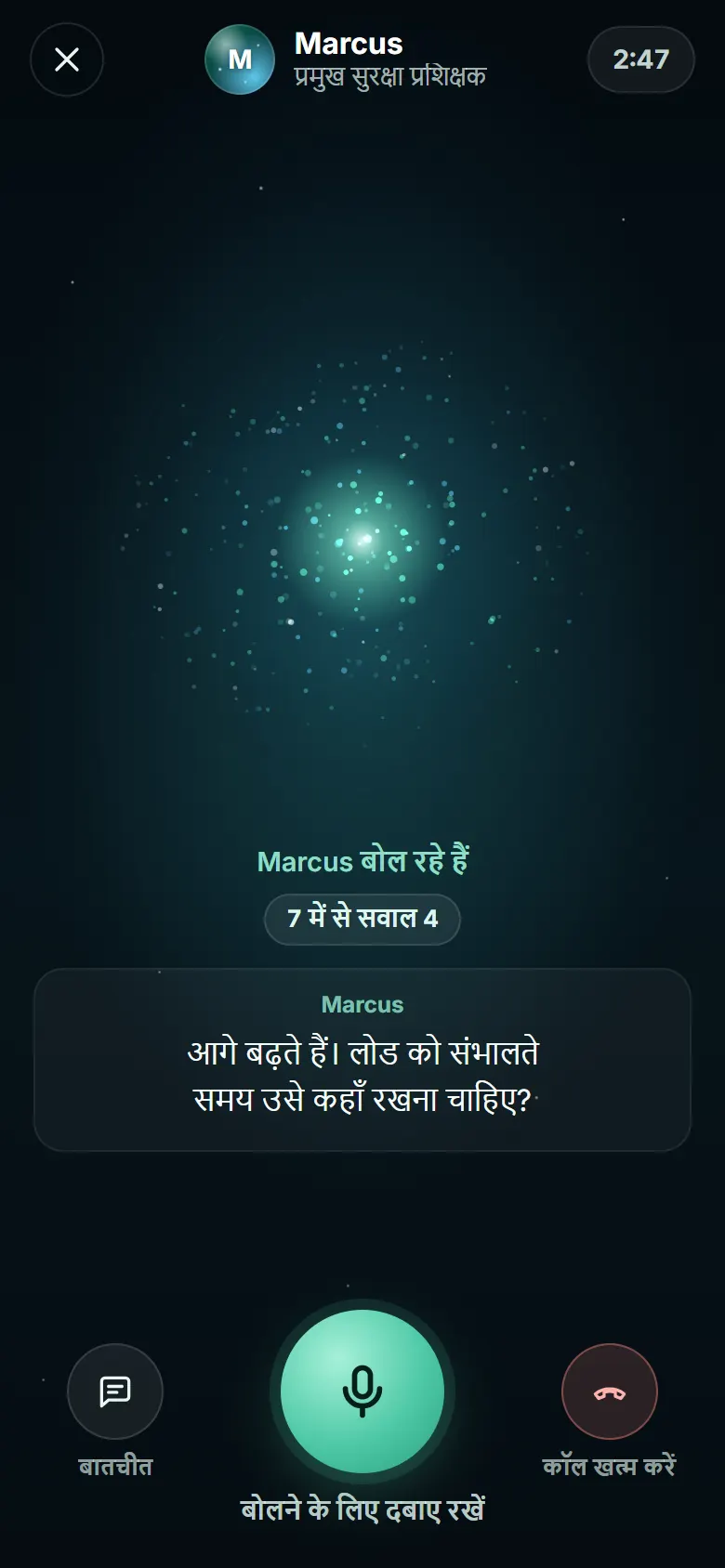
Quick drill: a real call screen in Hindi
Hindi

Quick drill

About ninety seconds: up to ten short spoken questions from the document. The AI never gives the answer. A question counter and a day streak make it a habit before the shift.

Who the AI plays

The person your people actually meet

Each character has a name, a voice and a temperament you can tune: patient or impatient, trusting or doubtful, quiet or talkative, cold or warm. They know only what a real one would know, and next time they remember what your person got wrong last time.

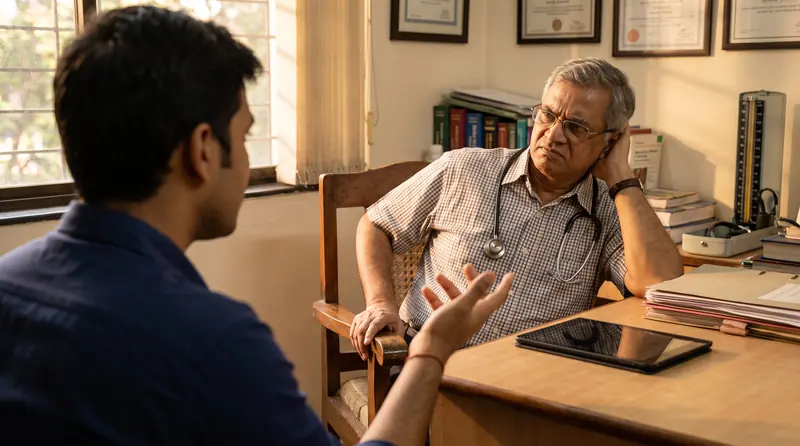
A medical representative presenting to a doubtful senior doctor in his clinic
  • CustomerIn your shop, showroom or branch
  • DoctorYour rep presents a product
  • ChemistA pharmacist or store owner
  • PatientOr a worried family member
  • CallerA question or a complaint
  • InspectorAsks how the job is done
  • New joinerYour person teaches them
  • SupervisorChecks their work
  • Anyone elseDescribed in one sentence
For the admin

From your document to a live practice in minutes

  1. 1
    Choose the kindA conversation, a mistake to spot, pictures to explain or a quick drill.
  2. 2
    Choose who the AI playsA customer, a doctor, an inspector, a new joiner, or anyone you describe.
  3. 3
    Point it at your documentOne of your Examiverse courses, or paste the document. Add a sentence of your own if you like.
  4. 4
    Read the draftIn about half a minute: the character, their voice and temperament, the situation, what must be said and what must never be said. Every fact with a number is checked against your document; a line with a number it does not state is dropped.
  5. 5
    Put it liveChoose the roles, the languages, how long a call may last and the pass mark. Everyone in those roles gets the same practice, with a practise-by date from the day they got the role.
The real setup, sped through the half-minute of drafting. Demonstration workspace, fictional company.
Built to be trusted

A practice partner that cannot make things up

  • Only your document

    The character knows the facts drafted from your document and nothing else. A line carrying a number your document does not state is dropped before anyone hears it.

  • It never gives the answer

    When your person says something wrong, the character doubts it the way a real one would, and lets them correct themselves.

  • Evidence is their own words

    A mark quotes what the person actually said. A quote they never said is never used against them.

  • A person decides the hard calls

    Never-say lines, numbers outside the document, missed moments, near misses and disputes go to a manager, who can listen and change the mark with a note.

  • Practice, not certification

    Certificates still come only from the assessment. A practice call never changes anyone’s record.

  • Recordings for 30 days

    A manager can listen for thirty days; then the recording is deleted and the words stay with the result.

Languages

In the language they think in

The character speaks it, the briefing and the result are written in it, and every reply is checked to stay in it.

  • English
  • Hindi
  • Arabic
  • Kannada
  • Tamil
  • Telugu
  • Marathi
  • Malayalam
  • Bengali
  • Gujarati
  • Odia
  • Urdu
  • Filipino
  • Nepali
  • Sinhala
Every role, every industry

Not just sales. Anyone who has to get it right.

The same practice works for the person who presents, the person who serves and the person who operates the machine: whoever has to explain it, do it or say no to a shortcut, in the language they think in.

  • Medical representative in pharma and life sciences, practising a conversation on a phone
    Pharma and life sciences Medical representative Practises with a doctor who questions the claim
  • Line operator in manufacturing, practising a conversation on a phone
    Manufacturing Line operator Practises with an auditor who asks how lockout is done
  • Nurse in hospitals and clinics, practising a conversation on a phone
    Hospitals and clinics Nurse Practises with a worried family member
  • Showroom associate in retail, india and the gulf, practising a conversation on a phone
    Retail, India and the Gulf Showroom associate Practises with a customer comparing options
  • Relationship manager in banking and insurance, practising a conversation on a phone
    Banking and insurance Relationship manager Practises with a customer asking about a rule
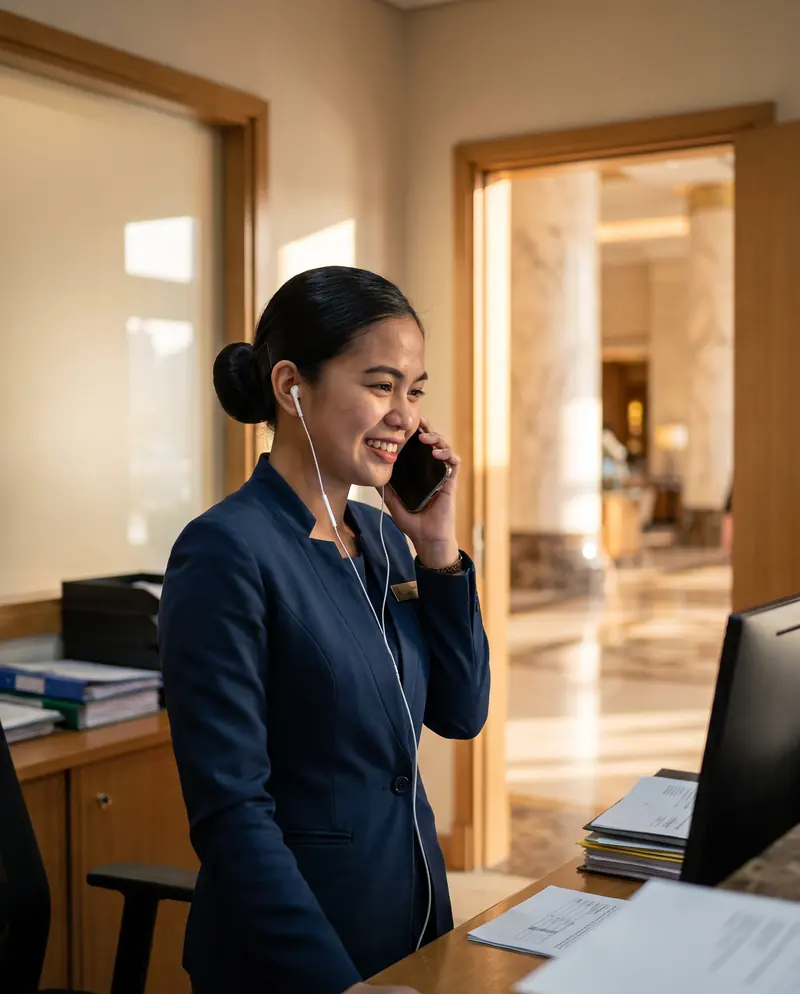
  • Front desk in hospitality, practising a conversation on a phone
    Hospitality Front desk Practises with a guest with a complaint
  • Warehouse team in logistics, practising a conversation on a phone
    Logistics Warehouse team Practises with a quick drill before the shift
  • Pharma and life sciences
  • Hospitals and clinics
  • Manufacturing
  • Retail and showrooms
  • Banking and insurance
  • Hospitality
  • Logistics and warehousing
  • Construction and field crews
  • Energy and utilities
  • FMCG and distribution
  • IT and services
  • Government and public sector

Illustrative photographs. Practice is built from each company’s own documents, for any role it names.

Questions

Live Practice, answered

Is Live Practice only for sales teams?

No. It works for any role that has to explain, check, serve or follow a procedure: a medical representative with a doctor, a showroom associate with a customer, a nurse with a family member, a line operator with an auditor, a new joiner being taught. The AI plays whoever your people actually meet.

Where does the character get its facts?

Only from your own document: one of your Examiverse courses, or a document you paste. Every fact with a number is checked against the document when the practice is drafted and again when you save it, and the character is told never to state anything else.

Does a practice call give a certificate?

No. Live Practice is practice. Certificates still come only from the assessment, so a good or bad call never changes anyone’s record.

How is a call marked?

Against what your document says: the points they had to get across, lines they must never say (saying one fails the call), moments planted in the call, and four skills. The result quotes their own words and shows a model answer. Calls go to a manager when something needs a person: a never-say line, a number not in the document, a missed moment, a mark close to the pass mark, or a dispute.

Which languages can people practise in?

15 languages: English, Hindi, Arabic, Kannada, Tamil, Telugu, Marathi, Malayalam, Bengali, Gujarati, Odia, Urdu, Filipino, Nepali, Sinhala. Each person is called in their own language when you leave the choice open and it is offered; otherwise in the first language you chose.

Do people need an app?

No. They sign in the way they already do, with their employee number and PIN, on a phone or a computer. They hold a button to talk, or type if speaking is not possible.

How long are recordings kept?

Thirty days, so a manager can listen. Then the recording is deleted; the words stay with the result.

How is it charged?

Practice calls use credits by talk time, counted in thirty-second steps. A pause, or a person thinking, is never charged. Plans are quoted by our team.

The full guide: Live Practice in the product guide.

Hear your own SOP talk back

Send us one procedure or product note. We will set up a practice from it, in your people’s languages, and you can take the first call yourself.